
Sierra Leone Financial Sector Adopts First Voluntary Sustainable Finance Principles.
Sierra Leone’s banking and microfinance sectors have today (23 June 2026) adopted the Sierra Leone Voluntary Sustainable Finance Principles (VSFP), the country’s first coordinated, sector-wide sustainable finance framework for financial institutions. The adoption marks an important step towards responsible investment, sustainable economic growth and a more resilient financial sector. Following the launch, the International Finance Corporation (IFC) will commence its two-day Sustainable Finance Capacity Building and Awareness Programme for financial institutions. Developed by the Sierra Leone Association of Commercial Banks (SLACB) and the Sierra Leone Association of Microfinance Institutions (SLAMFI), with technical support from Invest Salone, a UK-funded private sector development programme, the framework comprises nine voluntary principles designed to help financial institutions integrate environmental, social and governance (ESG) considerations into lending, investment, risk management and business decision-making. It provides a common reference point for banks and microfinance institutions as they respond to emerging sustainability risks and opportunities.
The need for the Principles.
The Principles respond to a growing recognition within Sierra Leone’s financial sector that ESG considerations are becoming increasingly important to risk management, investment decisions and long-term business performance. During the consultation process, participating institutions identified a need for clearer guidance on managing ESG risks, strengthening governance, expanding responsible finance and accessing sustainable, concessional and climate-related sources of finance. The VSFP also align Sierra Leone with a growing number of African countries, including Nigeria, Ghana, Kenya and Rwanda, that have introduced sustainable finance frameworks to support financial sector resilience and sustainable economic growth. This is particularly important given the financing challenges facing businesses across emerging markets. According to the IFC, micro, small and medium-sized enterprises account for more than 90% of businesses worldwide, yet businesses in emerging and developing economies face an estimated US$5.7 trillion financing gap. The framework is intended to help Sierra Leone’s financial institutions identify new market opportunities, access concessional and climate-related finance, strengthen risk management and support national economic priorities.
Developing the Principles
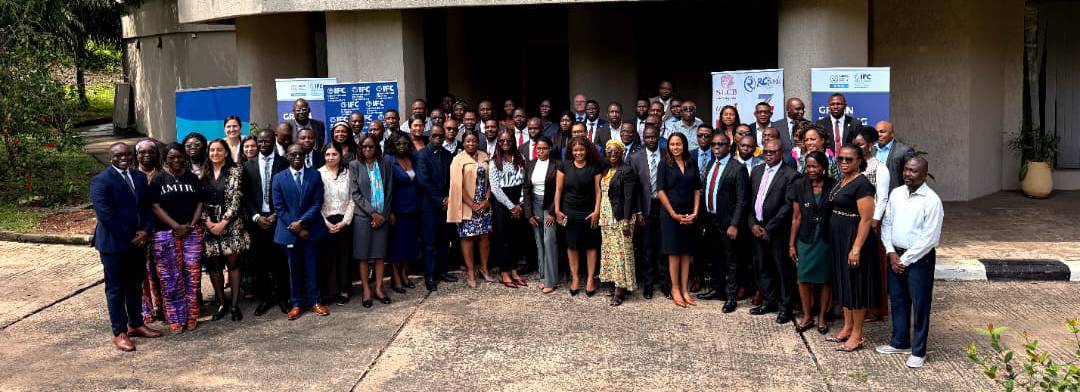
The creation of the VSFP began in February 2025, when SLACB and SLAMFI jointly established the Sustainable Finance Principles Working Group to lead the development of Sierra Leone’s first coordinated, sector-wide sustainable finance framework. Bringing together commercial banks, microfinance institutions and the Bank of Sierra Leone as an observer, the Working Group created a platform for dialogue and collaboration on sustainability risks, financial inclusion, governance, climate-related considerations and responsible finance. The process was consultative and evidence based. It included technical working sessions, bilateral consultations with all 13 commercial banks and four microfinance institutions, and a sector-wide baseline assessment to identify existing practices, capacity gaps, ESG risks and implementation priorities. The findings helped shape both the Principles and accompanying guidance, ensuring that the framework reflects the realities, opportunities and challenges facing Sierra Leone’s financial sector. Draft versions were refined through stakeholder feedback before being validated through the governance processes of SLACB and SLAMFI. Invest Salone, a UK-funded private sector development programme, supported the initiative through technical assistance, stakeholder engagement and capacity building delivered in partnership with Sierra Leone’s financial institutions and the Bank of Sierra Leone. This support formed part of a broader programme of work to strengthen sustainable finance capacity across the sector, including training on ESG issues, support on climate-related financial risks, knowledge exchange with regional peers, and the development of practical guidance and tools to support implementation of the Principles. Adopted at an event attended by representatives of financial institutions, regulators, the private sector and development partners, the Principles set out a shared commitment to sustainable economic growth, financial inclusion, ethics and human rights, environmental and social risk management, and transparent governance across Sierra Leone’s financial sector. Following the launch of the Principles, the International Finance Corporation will hold a two-day workshop to advance sustainable finance practices and to support the adoption of the Principles.
An important Milestone for Sierra Leone’s
Financial Sector
Mohamed Samoura, Chairman of the Sierra Leone Association of Commercial Banks, said: “The Sustainable Finance Principles mark an important milestone for Sierra Leone’s financial sector. They provide a practical framework to help institutions align business growth with environmental responsibility, social inclusion and sound governance. By working together, we can strengthen the resilience of our financial system while supporting the country’s long-term growth ambitions.” Raymond Koroma, Chairman of the Sierra Leone Association of Microfinance Institutions added that the Principles demonstrated the financial sector’s commitment to supporting inclusive growth: “The Voluntary Sustainable Finance Principles create an opportunity for financial institutions of all sizes to support sustainable economic growth while expanding access to finance for businesses and communities across Sierra Leone. For us sustainability is not abstract, it is about ensuring the woman selling at Abacha Street can still operate after the rains, it is about a farmer in Kabala accessing finance to switch to climate-smart inputs. It is about building businesses that can survive and grow beyond one generation. For microfinance institutions, the Principles are especially important because they connect financial inclusion with responsible, sustainable and community-focused finance.” Emma Fofana of Invest Salone said: “The Voluntary Sustainable Finance Principles are the product of a genuinely collaborative effort across Sierra Leone’s financial sector. They reflect a shared understanding that sustainable finance can support economic growth, strengthen resilience, expand access to finance and improve risk management. The VSFP also build on a broader programme of work to strengthen sustainable finance capacity across the sector, including support to the Bank of Sierra Leone, stakeholder dialogue and knowledge sharing. This is an important milestone, but success will ultimately depend on how effectively these Principles are put into practice.”
Putting the Principles into Practice
Following their adoption, participating institutions will begin implementing the Principles within their organisations, supported by sector guidance notes, capacity-building activities and ongoing coordination through the Sustainable Finance Principles Working Group. The next phase will focus on strengthening institutional capacity, embedding ESG considerations into decision-making processes, and supporting the development of sustainable finance products and services. Over time, the Principles are expected to contribute to stronger governance, improved risk management and greater access to sustainable sources of finance. The Principles and accompanying sector guidance notes are available at the Sustainable Finance Principles resource page. Their adoption marks an important milestone in Sierra Leone’s efforts to build a more resilient, inclusive and investment-ready financial sector, demonstrating the impact that can be achieved through collaboration between Sierra Leonean institutions, the private sector and UK-supported technical assistance.